An Origin Story
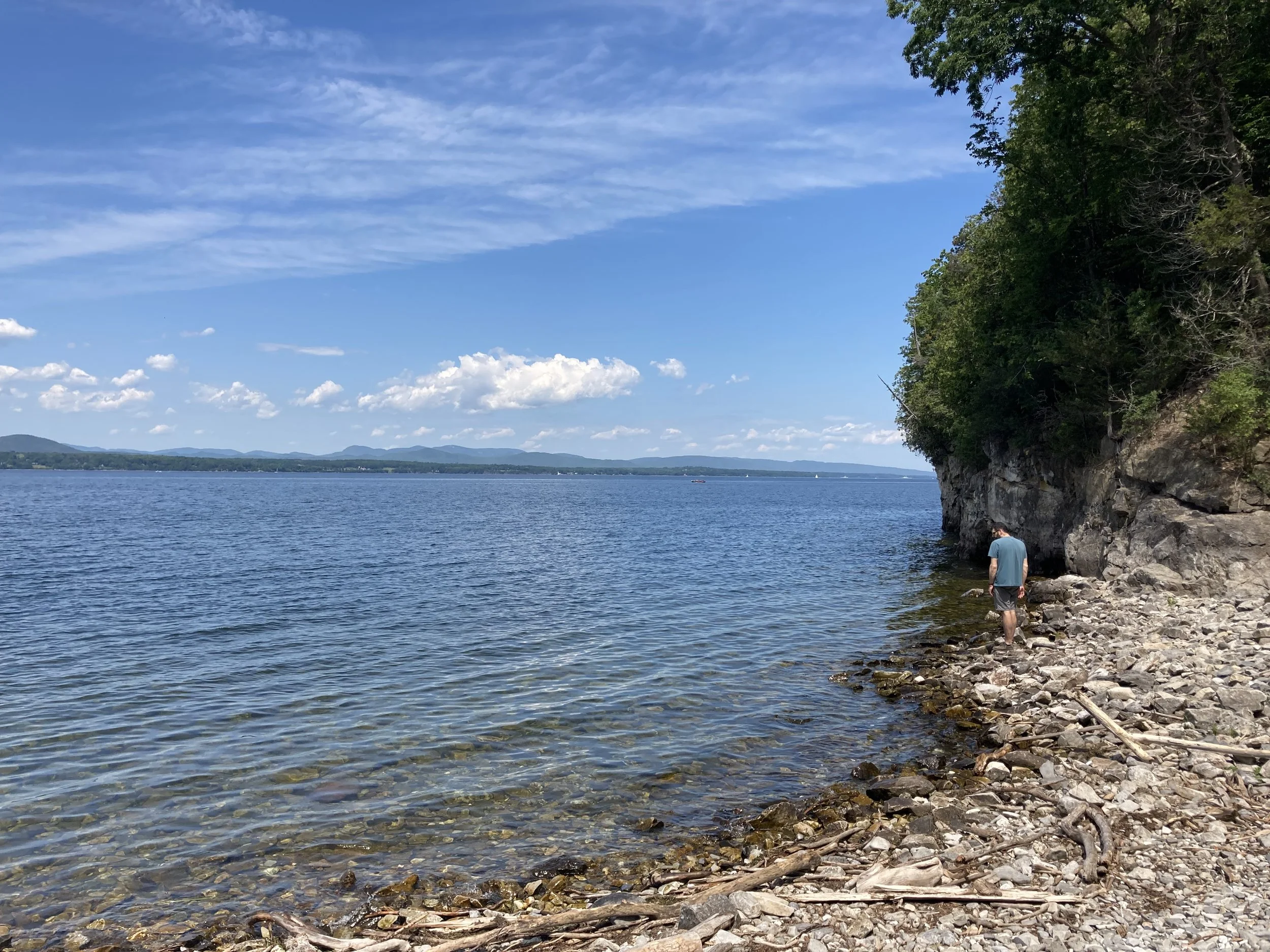
A view of Lake Champlain from the Vermont shore
I grew up with stories. My parents ensured that my brothers and I were all avid readers from early childhood. We were also precocious readers, due in part to a belief that stories were to be experienced, even if not yet fully comprehended. The perilous journey from the Shire of Tolkien’s hobbits was one of my first memories, read to us by my father in nightly installments, while I simultaneously flipped through illustrated volumes of mythologies from around the world.
These early encounters with stories have followed me my whole life. Greek and Roman mythology led to encounters with the Norse pantheon, then the Mayan, Hindu, Sumerian and multitudes of others. I encountered tricksters, heroes, monsters, and magicians, but in all these stories, it was tales of hidden things in the water that most consistently held my imagination.
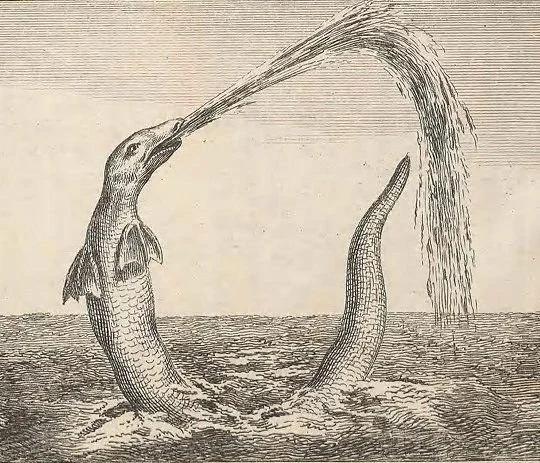
The Great Norse serpent from an eye-witness account as recorded by the historian Pontappidan in his Natural History of Norway (1755)
I wondered where exactly Odysseus encountered Scylla and Charybdis as he made his ill-fated journey home. I marveled to learn that the lines between history and folklore blurred considerably in the Norse sagas and that Thor and historians alike encountered serpents of unimaginable size and power.
Eventually I was exposed to fantastical stories of Arthur Conan Doyle and Jules Verne who filled the imagination with images of embittered submarine captains and hollow-earth expedition leaders battling giant tentacles and long-necked monstrosities.
And then one glorious summer day, a favored cousin told me a story about how she had seen Champ – the Lake Champlain monster. We were at our family camp on Colchester Point. The camp overlooked a small bay and from the shore of the beach, accessed by an impossibly rickety set of metal stairs, we could see across the breadth of the broad lake to New York roughly seven miles away. I wholeheartedly believed Corky when she told this story – a family event that had happened about four years before I was born. But it’s important to note that Corky was the cool cousin. As a teen she tamed big cats with a local animal tamer and brought us backstage at the circus. She was larger than life in my imagination and of course she saw Champ.
From that day forward, it was impossible not to gaze across the surface of the lake and wonder if I too could be so lucky.
My father, however, is a zoologist and with age came questions. How could Champ exist? It would have to be a member of a breeding population of a large undiscovered species and what were the odds of that? But in my case, these questions didn’t dismiss Corky’s story, or the stories of so many others that I heard who had seen something that they couldn’t explain. Rather it made me ask a different set of questions: Why were people seeing something despite the logical improbabilities?
When I started studying comparative mythology in college and then later at Syracuse University as part of a master’s degree with the Religion Department, I began to recognize that the why behind these stories was infinitely more significant than the what of these stories. People looked to the water and saw things around the world. They then interpreted what they saw in amazingly similar ways. Why?
We are tellers of stories. The human need to understand the world around us through narrative may be one of the defining elements of our species. Perhaps someday, science and discovery may prove that assumption faulty, but even if that happens, our need to use story to understand will not be cheapened. When I started looking into stories of sea and lake monsters from across the globe, these stories soon became about our connection with the water and with a world that existed beyond our vision – beyond the horizon line of the surface of any pond, lake, river, or ocean.
Something lurked beneath virtually every body of water. Something lurked in these stories.
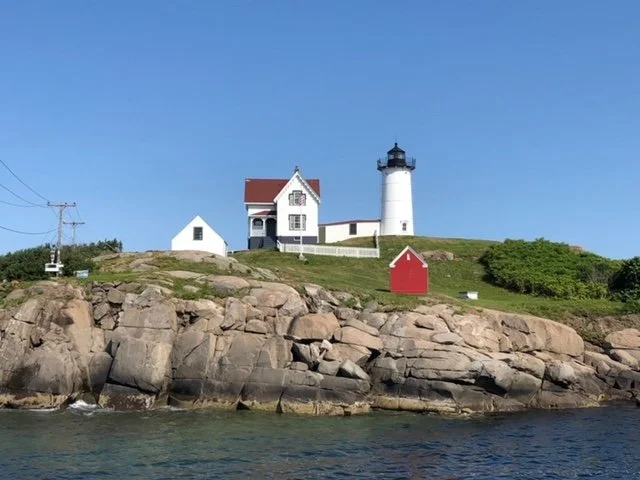
The Lighthouse on Cape Neddick in York, Maine
When I started diving, I began to appreciate how unique the vision of any diver is. We spend time in that unknown space that others only gaze at in wonder. Even if our time below is limited by the gas we take with us, we get to see what others do not. Our stories involve exploring that unknown zone. One of my favorite dive sights in New England is on Cap Neddick, Maine. A healthy bay with a maximum depth of about 50 feet brings divers from all over New England and a historic and very picturesque lighthouse brings terrestrial tourists into conversation with them. One of the first things that those who stay on shore ask is “What do you see down there?”
My answer is always the same: “So many things. It’s just stunning, you should see for yourself!”
This blog is about the intersection between divers and stories. My fascination with water monsters has made me realize that there are countless stories to tell. These stories have their own tricksters and heroes, monsters and magicians and they are waiting to be told.
We plan to start on the shores of Lake Champlain, where my fascination with these stories began. I now work as the Director of Training at Waterfront Diving Center. In that role, I’m also responsible for developing community events for a very active dive community. A little over a year ago, an idea was hatched – to chart the history of Champ and connect that history to dive worthy locations in the lake so that divers could dive where Champ swims and tell their own stories.
From that effort a project is emerging that is going to result in a Champ dive passport system that we hope to have available for curious aquatic explorers in the summer of 2026. It also includes a presentation on the Lore of the Lake Champlain Monster and this blog.
We plan to use the blog to explore the storied history of Champ – from mass encounters on pleasure cruises to offers of riches for its capture from non-other than that great American Showman P. T. Barnum himself. We’ll explore what these stories mean and why these stories persist and remain important.
We also plan to move beyond Champ to its innumerable cousins around the world. We’ll start with monsters lurking in New England waters and move beyond that. With all of these monsters we hope to be able to compile the stories and the history above the water and explore the environments they purport to call home.
We hope you join us as we explore what lurks beneath.
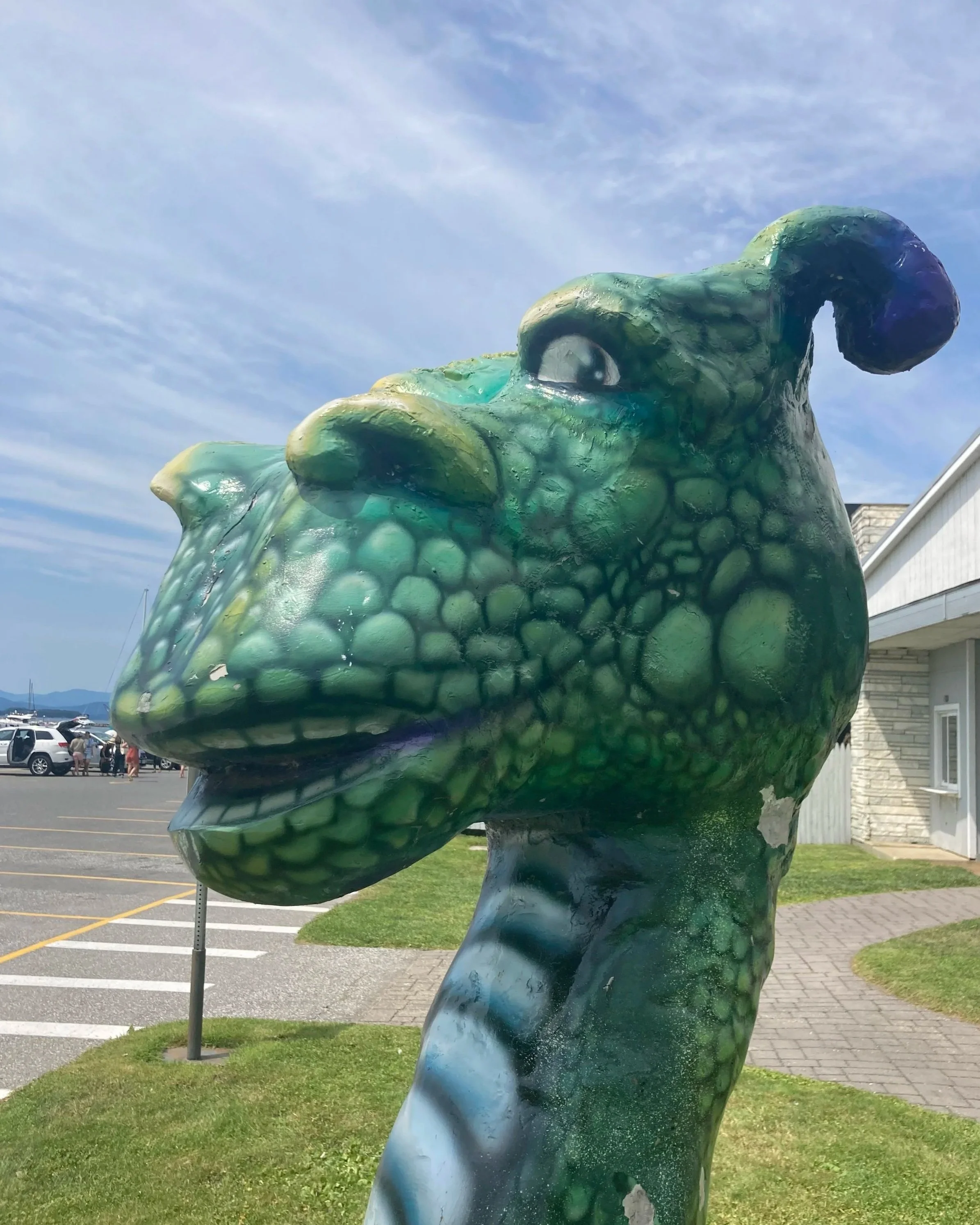
Champ Statue located at Perkin’s Pier in Burlington, Vermont
